

The "Node2Shell" Wake-Up Call: Why a Hidden Compression Bug Just Became Every SMB's Problem
A compression library almost no one has heard of just forced Microsoft, Node.js, and half the modern software supply chain into emergency-patch mode proof that your real attack surface is bigger than the software you think you run.

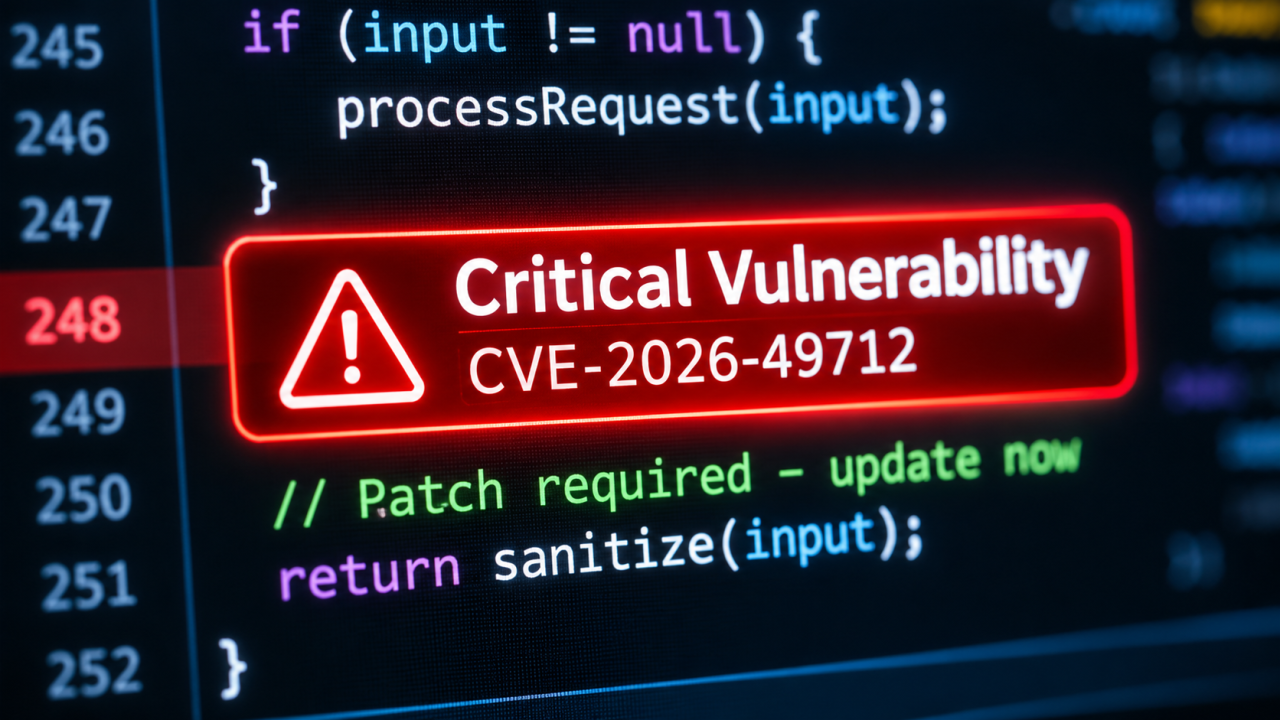
On October 21, 2026, the Node.js project disclosed a critical vulnerability now widely known as "Node2Shell" (also called Broccoli2Shell or HTTP2Shell), tracked as CVE-2026-111497. The flaw lives in Brotli, a Google-built compression library that web servers use to shrink data before sending it to browsers. A specially crafted, malformed Brotli data stream can trigger an out-of-bounds write that crashes a server process, leaks memory, or in the worst case hands an attacker remote code execution no login required.
What makes this story bigger than a typical "patch your server" advisory is how far Brotli's reach extends. Because the library is bundled or referenced inside Node.js (versions 22, 24, and 26), Microsoft's .NET runtime, Python packages, the Bun runtime, Envoy and Istio (used heavily in cloud infrastructure), and several Linux distributions, a single flaw in one small utility rippled into an emergency, all-hands patching event across the software supply chain. Microsoft issued its own emergency .NET update in response, and the bug has been assigned a CVSS severity score of 9.2 out of 10 in the "critical" range.
Within days, the story moved from "serious bug" to "active threat." The Cybersecurity and Infrastructure Security Agency (CISA) added CVE-2026-111497 to its Known Exploited Vulnerabilities (KEV) catalog on October 27, 2026, confirming that attackers had already begun exploiting it in the wild, and gave U.S. federal civilian agencies a hard deadline of November 10, 2026, to patch under Binding Operational Directive 26-04. SANS flagged the issue the same week, with its NewsBites editors labeling it a "patch now" item in their October 27 issue and noting the Node.js project's own October 21 disclosure as the starting point for the clock. Independent telemetry from threat-intelligence firm ELLIO recorded exploitation attempts against unpatched Node.js servers as early as October 26.
If your business doesn't run a federal contract, that November 10 deadline technically doesn't apply to you but treating it as someone else's problem would be a mistake. CISA explicitly urged "all network defenders," not just federal agencies, to treat the date as an outer limit for remediation.
Why this matters if you're not a federal contractor
Most small and mid-sized businesses don't think of themselves as running "Node.js" or "Brotli" they think of themselves as running a website, a customer portal, a point-of-sale system, or a line-of-business application built by a vendor. That's exactly the problem. Brotli and Node.js are embedded so deeply inside modern software stacks that an organization can be exposed without anyone on staff knowing the component exists, let alone that it needs an urgent update.
This is the recurring pattern behind nearly every major "emergency patch" event of the last several years: the vulnerability isn't in the application your team chose, it's in a dependency three or four layers beneath it. For a business without a dedicated IT or security team doing continuous asset inventory, that is precisely the kind of exposure that goes unnoticed until an attacker finds it first and ransomware crews and extortion gangs have shown repeatedly in 2026 that they move faster against small and mid-sized targets than enterprises can patch.
For businesses in regulated industries, the stakes compound quickly. A healthcare practice running a patient portal built on a vulnerable Node.js backend has a HIPAA problem the moment that server is compromised. A school district or university system using an affected web application has a FERPA exposure. A defense subcontractor working toward CMMC Level 2 certification has an auditable control failure if this kind of flaw sits unpatched past a reasonable remediation window. None of these outcomes require the attacker to target the organization specifically mass scanning for unpatched, internet-facing systems is how most of these incidents start.
What this means in practice
The good news is that the response to Node2Shell maps almost exactly onto controls most compliance frameworks already require. This is a useful moment to use the incident as a gut-check on your own program, not just a one-time patch job.
- Know what you're running. NIST CSF's "Identify" function and CIS Control 1 (Inventory and Control of Enterprise Assets) exist for exactly this scenario. If you can't quickly answer "which of our systems touch Node.js, .NET, or Python-based applications," that's the real finding here not the Brotli bug itself.
- Patch on a defined timeline, not an ad hoc one. CIS Control 7 (Continuous Vulnerability Management) calls for remediating critical, actively exploited vulnerabilities within days, not weeks. Treat any vendor or in-house system flagged against a CISA KEV entry as a same-week priority.
- Confirm with your vendors, don't assume. If a line-of-business application, EHR system, student information system, or e-commerce platform is managed by a third party, ask them directly and in writing whether Node2Shell affects their stack and when it was patched. This is also a documentation step auditors will want to see for HIPAA, FERPA, or CMMC purposes.
- Watch for signs of prior compromise, not just future prevention. Because exploitation began before most organizations even knew the bug existed, a clean patch today doesn't rule out compromise last week. Review logs on internet-facing systems for unusual activity dating back to late October.
Build the habit, not just the fix. This is the fourth major "named" vulnerability of 2026 to require emergency, cross-platform patching. A documented, tested patch-management process one of the most basic requirements across NIST CSF, CIS Controls, HIPAA's Security Rule, and CMMC is what separates businesses that absorb these events in hours from those that spend weeks in incident response.
The bottom line
Node2Shell is not a reason to panic, but it is a useful, concrete example of a risk category that SMBs consistently underestimate: the software you didn't choose, buried inside the software you did. Businesses that already have a patch management discipline and an accurate asset inventory handled this event in a day. Businesses without one are still finding out whether they were exposed. If this story prompts only one action, it should be asking your internal team or your IT/managed services provider a simple question this week: "Were we affected, and how do we know?"
Related Resources
- Primary source (SANS): SANS NewsBites, Vol. XXVIII, Issue 80 (October 27, 2026) — "Patch Now: Brotli Emergency Fixes" item covering CVE-2026-111497 ("Node2Shell"), citing the October 21, 2026 Node.js disclosure and a CVSS 9.2 severity score. View source
- Supporting source: BleepingComputer, "CISA warns of hackers now exploiting critical Node2Shell flaw," October 28, 2026 — CISA KEV catalog addition and Binding Operational Directive 26-04 federal patch deadline. View source
-
Supporting source: GCN, "CISA
sets November 10 deadline for high-severity Node.js flaw," November 6, 2026. View source